Oil prices ease as Brent hits $68.99 and WTI falls to $64.06, US-Iran tensions in focus
Oil prices eased in early trading on February 10, 2026, as Brent crude slipped to $68.99 per barrel and U.S. West Texas Intermediate (WTI) fell to $64.06. The pullback followed a recent rally driven by rising US-Iran tensions, which had lifted fears of supply disruption in the Middle East. Nearly 20% of the world’s oil flows through the Strait of Hormuz, making any geopolitical shift in the region critical for energy markets.
Fresh diplomatic signals and cautious investor sentiment have now cooled prices, at least for the moment. Still, traders remain alert, as even minor developments can move the market sharply. With global demand uncertain and supply risks still in play, oil prices remain on a fragile path.
Advertisement
Current Oil Market Snapshot: Key Price Levels and Trends
Latest Brent and WTI Prices – February 10, 2026
Global oil prices eased in early trading on February 10, 2026, as traders assessed shifting geopolitical risks and supply concerns. According to Reuters, Brent crude futures slipped 0.35% to $68.99 per barrel, while U.S. West Texas Intermediate (WTI) fell 0.47% to $64.06 per barrel.
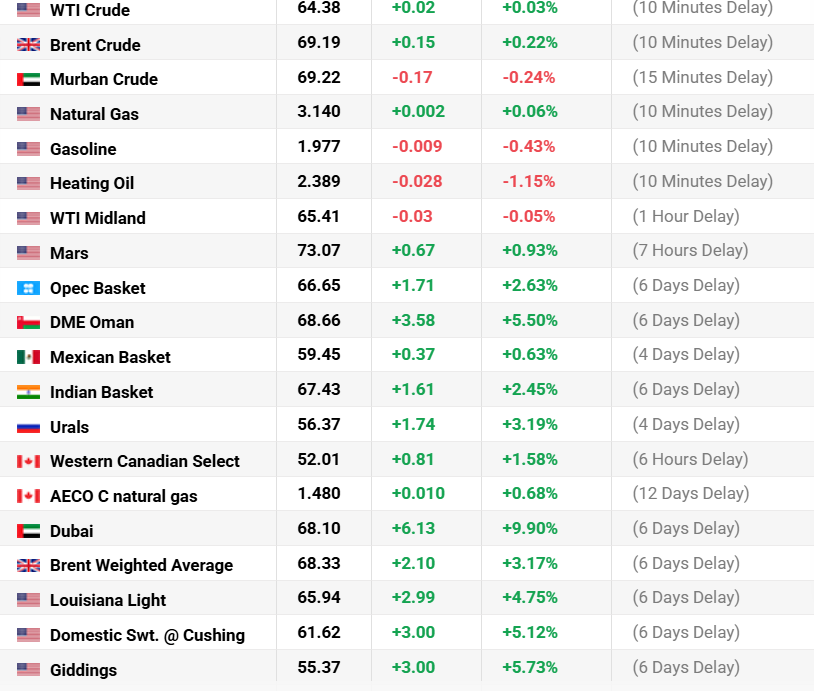
Recent trading sessions have seen wide price swings. Brent touched highs above $69.40, while WTI briefly crossed $64.60, driven mainly by geopolitical headlines. However, renewed diplomatic signals between Washington and Tehran cooled immediate fears, leading to mild profit booking.
Short-Term Market Direction
Oil markets remain highly reactive to headlines. Traders are balancing:
- Rising Middle East geopolitical risk
- Fragile global demand recovery
- OPEC+ production discipline
- Sanctions on Russian energy exports
Market sentiment remains cautious, with prices moving within a tight range of $67-$70 for Brent and $63-$65 for WTI.
Why are US-Iran Tensions Driving Oil Price Volatility?
Why Is the Strait of Hormuz So Important?
The Strait of Hormuz is one of the world’s most critical energy chokepoints. Nearly 20% of global oil supply passes through this narrow waterway daily, linking Middle East producers to international markets.
Any military escalation between the U.S. and Iran risks disrupting tanker movements, causing immediate supply shortages and price spikes.
Recent Security Developments
In early February 2026, the U.S. Department of Transportation issued maritime warnings advising U.S.-flagged vessels to avoid Iranian waters. Iran responded with strong warnings, escalating regional tension. These developments pushed Brent prices temporarily above $69.40.
How Did Diplomacy Calm Markets?
Indirect talks hosted by Oman on February 7-9, 2026, signaled possible de-escalation. Iranian officials described early discussions as “a constructive start,” easing immediate fears of conflict. This reduced the geopolitical risk premium in crude markets.
Supply-Side Pressures: OPEC+, Sanctions, and Export Shifts
What Is OPEC+ Doing Right Now?
OPEC+ has extended existing production cuts through March 2026, keeping millions of barrels per day off the market. Saudi Arabia also reduced its official selling prices to Asia for the fourth straight month, signaling weaker near-term demand expectations.
How are Sanctions Affecting Global Oil Trade?
The European Union proposed expanded sanctions on Russian oil, targeting shipping routes and third-country ports. This has pushed major buyers, including India’s Indian Oil Corp, to source crude from West Africa and the Middle East instead of Russia.
Production Disruptions in Kazakhstan
Kazakhstan’s massive Tengiz oil field faced infrastructure disruptions, cutting output by nearly 35% temporarily, tightening short-term supply and supporting prices.
Demand Outlook: Global Economy, China, and Inflation Impact
Is Global Growth Limiting Oil Demand?
Economic data suggests slowing industrial activity across Europe and China. The IMF projects moderate global growth in 2026, reducing expectations of aggressive oil demand recovery.
China’s Oil Import Signals
China remains cautious. Refinery runs have stayed flat despite government stimulus measures. Weak housing demand and export slowdown are limiting energy consumption growth.
Inflation and Interest Rate Pressure
A strong U.S. dollar continues to pressure commodity prices. Higher interest rates reduce industrial expansion and fuel consumption, keeping oil demand growth muted.
Technical Levels and Trader Positioning
What are Key Support and Resistance Levels?
Technical charts show:
- Brent resistance: $69-$70
- Brent support: $66-$67
- WTI resistance: $65
- WTI support: $62-$63
Market analysts at PVM Oil Associates say that without actual supply disruptions, oil prices may drift lower in coming sessions.
How are Traders Positioning?
Hedge funds and speculative traders have trimmed long positions, preferring short-term trades over long-term bets. AI-driven market models, including AI stock analysis tools, are increasingly used by institutional traders to track geopolitical risk patterns and price volatility more accurately.
What to Watch Next: Catalysts for Oil Price Direction
Key upcoming triggers that could shift oil prices sharply include:
- Results of ongoing U.S.-Iran nuclear talks
- Any security incidents in the Strait of Hormuz
- OPEC+ production policy updates
- Weekly U.S. Energy Information Administration (EIA) inventory data
- China’s industrial output and oil import statistics
Even small diplomatic developments could swing oil prices by 2-4% in a single session, according to market analysts.
Conclusion: Oil Markets Remain Caught Between Diplomacy and Disruption
Oil prices easing toward $69 for Brent and $64 for WTI reflect temporary relief driven by diplomatic efforts. However, the fragile geopolitical situation keeps markets tense. With strategic supply routes at risk and global demand struggling to recover fully, oil prices are likely to remain volatile through early 2026.
Any military escalation could quickly send prices higher, while successful negotiations may push crude lower. Investors and policymakers will continue to watch Middle East developments closely, as they remain the strongest force shaping oil markets this year.
Advertisement
Frequently Asked Questions (FAQs)
Oil prices fell on February 10, 2026, as easing US-Iran tensions reduced supply fears. Traders booked profits after recent gains, pushing Brent to $68.99 and WTI to $64.06.
US-Iran tensions raise supply disruption risks near the Strait of Hormuz, which carries 20% of global oil. Any escalation increases prices, while diplomatic progress lowers geopolitical risk premiums.
Analysts expect Brent to trade between $67-$70 and WTI between $63-$65 this week, as markets react to geopolitical updates, supply signals, and global demand uncertainty.
Disclaimer:
The content shared by Meyka AI PTY LTD is solely for research and informational purposes. Meyka is not a financial advisory service, and the information provided should not be considered investment or trading advice.
Advertisement
What brings you to Meyka?
Pick what interests you most and we will get you started.
I'm here to read news
Find more articles like this one
I'm here to research stocks
Ask our AI about any stock
I'm here to track my Portfolio
Get daily updates and alerts (coming March 2026)