The Indian stock market opened sharply lower on Friday, February 13, 2026, as heavy selling dragged Nifty50 below the key 25,600 level and pushed the Sensex down by over 700 points in early trade. The sudden fall caught investors off guard after recent record highs. Weak global cues, sharp losses in IT stocks, and renewed fears around interest rates combined to hit market sentiment. Within minutes of the opening bell, billions of rupees in market value were wiped out, raising concerns about short-term volatility.
Traders turned cautious, while long-term investors looked for clarity. As uncertainty spreads across sectors, today’s market action highlights how fast trends can change on Dalal Street, making this a crucial moment to understand what triggered the slide and what lies ahead.
Advertisement
India Market Snapshot: How Bad Was Today’s Fall?
Indian stock markets witnessed heavy selling pressure on Friday, February 13, 2026, with frontline indices slipping sharply in early trade. At 9:30 AM IST, the benchmark indices were trading deep in the red:
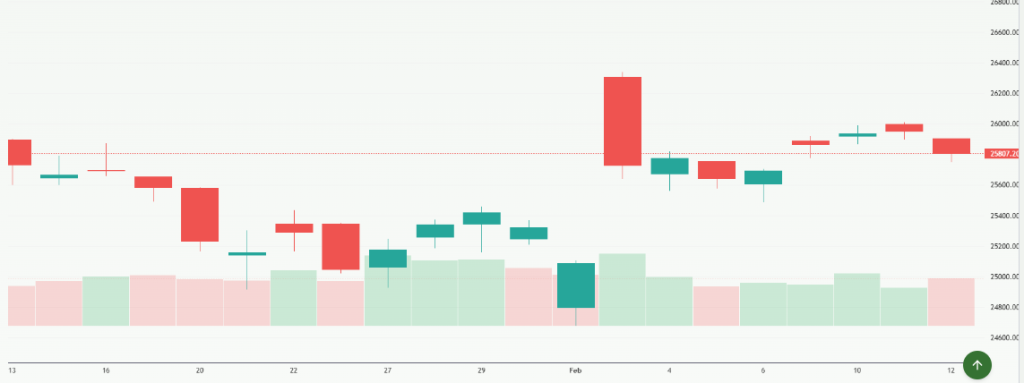
- Nifty50: 25,592, down 214 points (-0.83%)
- BSE Sensex: 82,931, down 744 points (-0.89%)
- Total market value erosion: Over ₹4 lakh crore wiped out
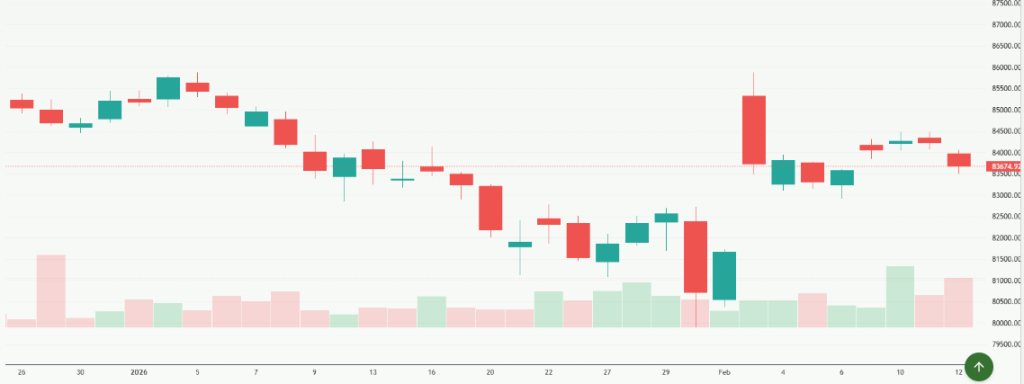
The selling was broad-based. Large-cap, mid-cap, and small-cap stocks all faced pressure. IT stocks were the biggest drag on the market. Heavyweights like Infosys, TCS, HCL Tech, and Tech Mahindra together accounted for nearly 400 points of the total Sensex fall.
According to The Economic Times, this was among the steepest single-session declines of February 2026, highlighting rising market nervousness.
Why Did the Indian Stock Market Crash Today? – 5 Major Reasons
Why Did IT Stocks Crash Over 5% Today?
The Nifty IT index plunged over 5.5%, marking its worst fall of 2026 so far. The main trigger was growing fear around artificial intelligence disrupting traditional IT outsourcing models.
Global AI firms recently launched advanced automation tools capable of replacing routine software services. This raised concerns that Indian IT companies may lose pricing power and deal volumes.
According to Reuters, analysts believe AI adoption could significantly reduce manpower-driven contracts in the coming years, putting pressure on margins. Major IT stocks that fell sharply:
- Infosys: Down 5.1%
- TCS: Down 4.8%
- HCL Technologies: Down 5.3%
- Tech Mahindra: Down 6%
How Did Weak Global Markets Impact Indian Stocks?
Asian markets traded weakly following overnight losses on Wall Street.
Key concerns included:
- Rising US bond yields
- Strong US economic data
- Reduced chances of early Federal Reserve rate cuts
The Nasdaq and S&P 500 closed lower on February 12, 2026, led by technology stocks. This negative global cue triggered risk-off sentiment across emerging markets, including India.
Foreign investors turned cautious and booked profits.
Why Did Strong US Data Hurt Indian Markets?
Fresh US jobs data showed strong labor market growth, indicating that inflationary pressure may stay high. This reduced expectations of near-term interest rate cuts by the Federal Reserve.
Higher global interest rates make emerging market assets less attractive. This leads to:
- Capital outflows
- Weak currency sentiment
- Equity market selling pressure
As a result, foreign institutional investors (FIIs) were net sellers on February 13, 2026.
Did the Technical Breakdown Worsen the Fall?
Yes. Technical indicators played a major role. Nifty50 breached the crucial support level of 25,600, triggering:
- Stop-loss selling
- Algorithm-driven trades
- Intraday panic among retail traders
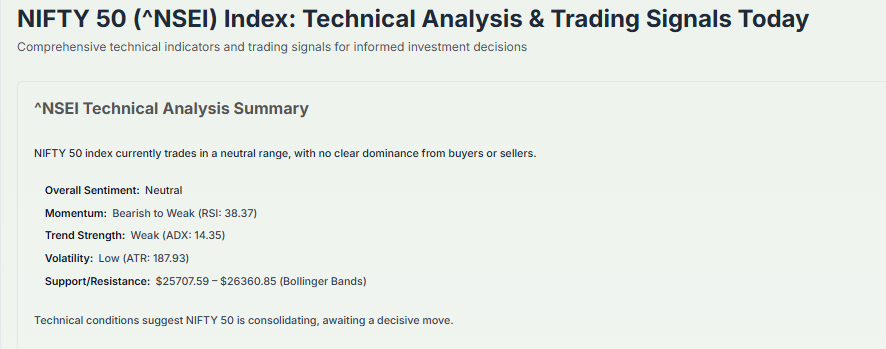
Once the index broke this psychological level, selling accelerated, pushing Nifty near 25,550 within minutes. Market technicians now see 25,400-25,500 as the next key support zone.
Was Profit Booking a Factor?
Yes. Indian markets recently touched fresh lifetime highs near 26,000. With global uncertainty rising, investors preferred to lock in profits. High valuations in IT, FMCG, and capital goods stocks also encouraged selling.
Top Losers & Sectoral Impact: IT Bears the Brunt
The sell-off was most intense in technology stocks.
Top Nifty50 Losers
- Tech Mahindra – -6%
- HCL Technologies – -5.3%
- Infosys – -5.1%
- TCS – -4.8%
IT stocks alone wiped out nearly ₹1.2 lakh crore in market value.
Sectoral Performance Snapshot
- IT: -5.5%
- FMCG: -1.4%
- Realty: -1.6%
- Metal: -0.8%
- Pharma: -0.6%
Broader indices also weakened:
- Nifty Midcap 100: -0.5%
- Nifty Smallcap 100: -0.6%
This confirms broad market participation in the decline.
Expert Views: What Analysts Say About Market Direction
Market experts remain cautious about short-term trends. Dr. VK Vijayakumar, Chief Investment Strategist at Geojit Financial Services, said AI disruption has created uncertainty for Indian IT companies. He warned that earnings growth could stay under pressure for the next few quarters. Technical analysts suggest:
- Nifty support: 25,400-25,500
- Nifty resistance: 26,000
A sustained break below 25,400 could open downside toward 25,000. Long-term analysts remain positive on:
- Banking stocks
- Capital goods
- Infrastructure
- Telecom
Stock Focus: Infosys – Technical & Fundamental View
Short Stock Details & Forecast – Meyka Analysis
- Stock: Infosys Ltd
- CMP: ₹1,688
- Trend: Short-term bearish
- Support: ₹1,650
- Resistance: ₹1,740
According to Meyka’s AI-powered stock analysis platform, Infosys shows weak momentum with rising selling pressure. The tool highlights slowing deal flow and margin risk from automation trends.
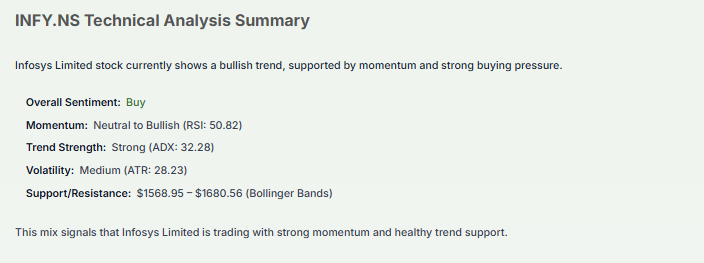
Meyka suggests neutral-to-cautious positioning until strong earnings visibility returns. Supporting analyst views from Motilal Oswal and ICICI Securities also indicate limited upside in the short term, citing AI disruption and pricing pressure.
What Should Investors Do Now? Strategy After Today’s Fall?
Market corrections often create confusion. A calm strategy is essential.
Key investor actions:
- Avoid panic selling during volatile sessions
- Focus on quality large-cap stocks
- Accumulate gradually during dips
- Avoid overexposure to IT stocks until earnings visibility improves
Safer sectors during volatility:
- Banking
- FMCG
- Healthcare
- Telecom
Short-term traders should watch 25,400 on Nifty closely. A breakdown could increase downside risk.
Conclusion: Volatility Returns as Markets Reassess Growth & AI Risks
The sharp fall in Nifty50 below 25,600 and the 700+ point Sensex decline on February 13, 2026, reflect a major shift in market sentiment. Rising concerns over AI disruption, global rate uncertainty, and technical breakdown levels triggered aggressive selling. While near-term volatility may persist, India’s long-term economic fundamentals remain strong. For investors, discipline, patience, and sector selection will be crucial in navigating this uncertain phase.
Advertisement
Frequently Asked Questions (FAQs)
On February 13, 2026, Indian markets fell due to heavy selling in IT stocks, weak global cues, rising US bond yields, and lower hopes of early interest rate cuts.
In February 2026, IT stocks dropped due to fears of AI replacing traditional services, weak global demand outlook, margin pressure, and investor concerns over slower revenue growth.
Analysts say Nifty may testthe 25,400-25,500 levels soon. A fall below this zone could increase short-term downside risk and push the index closer to 25,000.
Disclaimer:
The content shared by Meyka AI PTY LTD is solely for research and informational purposes. Meyka is not a financial advisory service, and the information provided should not be considered investment or trading advice.
Advertisement
What brings you to Meyka?
Pick what interests you most and we will get you started.
I'm here to read news
Find more articles like this one
I'm here to research stocks
Ask our AI about any stock
I'm here to track my Portfolio
Get daily updates and alerts (coming March 2026)