The Asia stocks markets climbed on Wednesday, 11 February 2026, as investors welcomed strong corporate earnings and grappled with fresh macro data. Regional indexes rallied modestly, with Australia’s S&P/ASX 200 leading the gains after the Commonwealth Bank of Australia (CBA) posted record first‑half profits, sending its shares sharply higher and lifting financial sector sentiment.
Meanwhile, China’s January inflation figures came in softer than expected, adding a note of caution about demand and price pressures across the region. Traders also stayed alert ahead of key U.S. jobs and inflation releases later in the week, which could shift global rate expectations. This mix of earnings‑driven optimism and macro uncertainty set the stage for further moves in Asian stocks.
Advertisement
Asia Stock Market Overview: Regional Momentum and Macro Trends
Most Asian stock markets rose on Wednesday, 11 February 2026, with gains led by Australia’s benchmark index. Regional sentiment was boosted by strong corporate earnings in Australia. At the same time, softer inflation figures from China drew investor attention to demand trends across Asia.
The S&P/ASX 200 climbed sharply, outpacing many of its regional peers. Australia’s financial stocks provided a solid foundation for the rally, while energy and materials also contributed. In contrast, China’s inflation data for January showed slower‑than‑expected consumer price growth and continued producer price declines, highlighting persistent deflationary pressures in the world’s second‑largest economy.
Elsewhere in Asia, markets were mixed but generally positive. South Korea’s KOSPI rose strongly, while Hong Kong’s Hang Seng made smaller gains. Japanese stocks were quiet due to a public holiday.
Investors are watching upcoming U.S. jobs and inflation data, which could reshape expectations for interest rate policy from the Federal Reserve. This is especially important given recent moves in bond yields and currency markets. Key data to note:
- ASX 200 hit multi‑month highs.
- Chinese CPI slowed in January.
- U.S. data remains a major focus for global risk assets.
Australia Leads the Rally: Why CBA Earnings Matter?
What Did CBA Report and How Did Markets React?
Australia’s largest bank, Commonwealth Bank of Australia (CBA), delivered a record first‑half cash profit of A$5.45 billion for the six months ending 31 December 2025. This performance beat market expectations and drove CBA’s share price sharply higher on 10-11 February 2026.
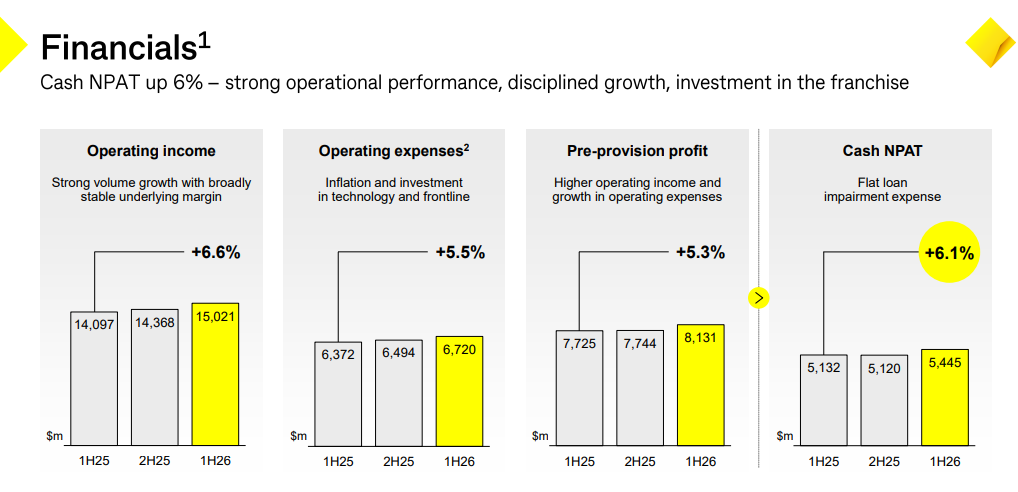
CBA’s earnings were a major catalyst for the S&P/ASX 200 index, which climbed about 1.66% on 11 February 2026, marking one of its strongest sessions in months. Financials led the way higher, with CBA and other major banks all contributing to gains.
The strong results reflected robust home and business lending, faster deposit growth, and greater market share in key banking segments. CBA maintained stable credit quality amid competitive pressures, although its net interest margin dipped slightly to 2.04% due partly to pricing competition and lower treasury income.
The bank also declared an interim dividend of A$2.35 per share, which was above market forecasts and helped support investor confidence.
Meyka Stock Forecast and Technical Summary
CBA.AX Forecast and Technical Analysis on Meyka shows mixed short‑term and long‑term expectations. In the near term, Meyka’s AI‑powered forecast suggests a slight pullback, projecting a potential move toward about A$1440A$142 over the next month/quarter, signaling short‑term momentum pressure.
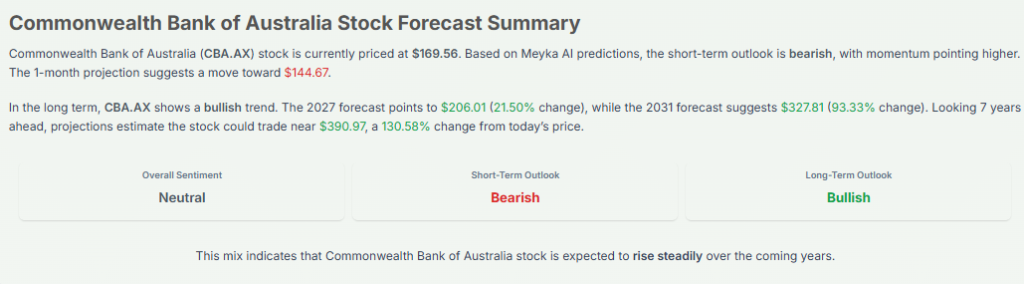
The long‑term outlook remains bullish, with models pointing toward a 2026-2027 price target around A$206 and further gains in subsequent years, assuming earnings and macro conditions remain stable.
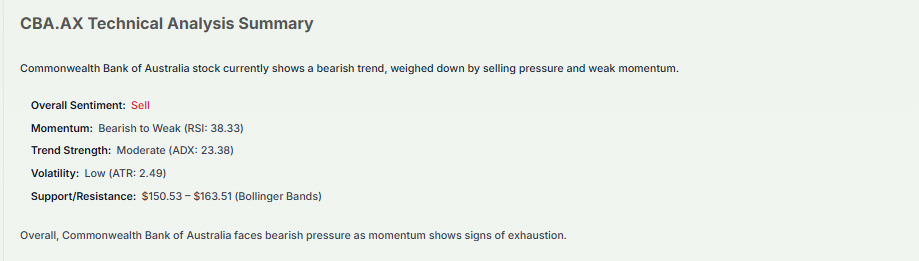
Technical indicators from Meyka show the stock trading between key support and resistance levels, with mixed momentum signals suggesting that short‑term volatility may persist. The AI stock analysis tool embedded in Meyka combines trend data and historical patterns to identify such potential moves.
Analyst and Market Support
Other market commentators also point to CBA’s results fueling optimism for bank shares more broadly. Positive sentiment around mid‑cycle rate environments and improving loan demand has underpinned financials in Australia’s equity market. However, some analysts caution that high valuations and margin pressure remain risks.
China CPI Softness: Market Implications Explained
What Were China’s Latest Inflation Figures?
In January 2026, China’s Consumer Price Index (CPI) rose by only 0.2% year‑on‑year, below market expectations and down sharply from 0.8% in December. Producer prices stayed in deflationary territory.
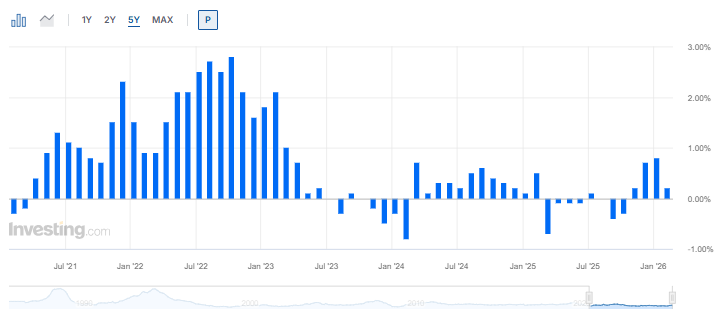
This outcome suggests weak demand in the Chinese economy. Consumer prices grew less than analysts forecast, and producer price deflation signals that companies are still cutting selling prices, likely due to oversupply or weak industrial demand.
Why Does China CPI Matter for the Asia Stocks?
China is a major driver of global demand for commodities and finished goods. Slower inflation often points to lower economic activity, which can weigh on corporate earnings across sectors. For Asian export markets and commodity‑linked economies, subdued CPI can reduce pricing power and profit margins.
In the short term, soft CPI data can also affect currency markets. For example, the Australian dollar strengthened as markets interpreted the inflation figures in the context of monetary policy expectations.
At the same time, investors may interpret weaker China inflation as a catalyst for future policy support measures, including potential fiscal or monetary easing. This dynamic can add complexity to risk sentiment and equity market trends.
Conclusion: What to Watch Next in Asia Markets
Asia’s equity markets are showing cautious optimism, driven by strong Australian corporate earnings and tempered by soft inflation data from China. The rally in Australia’s stock market underscores the importance of company‑specific catalysts, especially in the financial sector. Meanwhile, macro data from China highlights persistent demand challenges that could shape regional growth prospects.
Looking ahead, traders and investors should focus on upcoming U.S. jobs and inflation reports, as these could influence global interest rate expectations and risk appetite. Continued monitoring of sector rotations, particularly financials, materials, and export chains tied to China, can help gauge market breadth and momentum.
In a climate of mixed signals, combining fundamental insights with technical analysis and macro awareness will be key for navigating Asian stock trends. Follow these themes to stay informed and prepared for market shifts.
Advertisement
Frequently Asked Questions (FAQs)
Asia stocks rose on February 11, 2026, because Australian shares jumped after strong CBA earnings. Weak China CPI also drew attention. Investors reacted to both company profits and macro news.
CBA reported record first-half profits on February 10, 2026, lifting its shares. This boosted the ASX 200, as investors cheered strong financial results and improved market confidence.
China’s January 2026 CPI growth was lower than expected. Weak inflation suggests slower demand. This can affect exports, profits, and market sentiment worldwide, making investors cautious but watchful.
Disclaimer:
The content shared by Meyka AI PTY LTD is solely for research and informational purposes. Meyka is not a financial advisory service, and the information provided should not be considered investment or trading advice.
Advertisement
What brings you to Meyka?
Pick what interests you most and we will get you started.
I'm here to read news
Find more articles like this one
I'm here to research stocks
Ask our AI about any stock
I'm here to track my Portfolio
Get daily updates and alerts (coming March 2026)